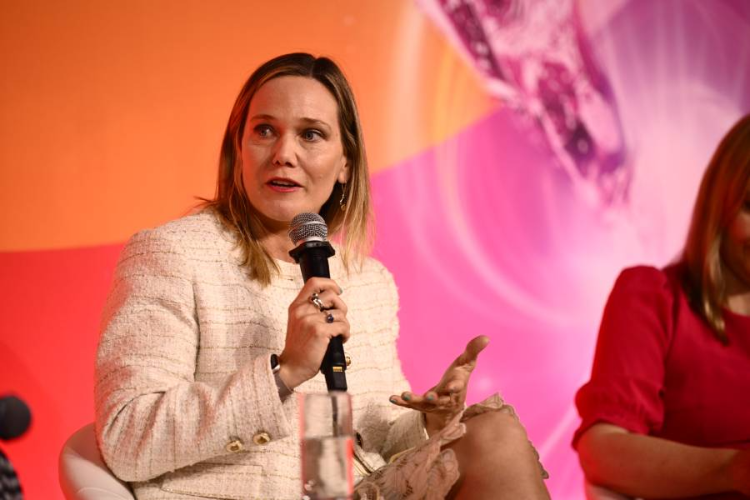
“If you don’t see your own value, no one else will” - conversation with Caro Paduch, VP of Global People Programs & Career Architecture at GlobalLogic, on finding your strengths, career architecture, and the power of mentorship.
Your professional path is truly impressive - from international relations to human resources. How did you get to this point?
It feels like my career chose me. Originally, I wanted to become a diplomat. I have always wanted to work in a global environment. My fascination with different cultures led me to study international relations and a master’s in international communications.
I did an internship at an embassy in the Netherlands, and later at the Foreign Office. But this job involved just sitting and waiting for years to pass before getting promoted. I remember proposing a research initiative to one of my leads. His reaction? He was too busy playing on his laptop to care! That’s when I realized: this isn’t life for me. I wanted to get things done!
At the time, a friend told me to try the corporate world. But it was year 2001 and Argentina, where I come from, was hit by a major economic crisis. There were barely any jobs. But I could speak English, which landed me a call center job and was assigned to supervise a team of 25. From there, I was moved into an assistant role for a CEO.
Then another opportunity came, and I started working for American Express, where eventually I was assigned HR duties. Next, I moved to Accenture and worked there for 16 years in different areas within HR. But at some point, I realized that I wasn’t evolving. So, when GlobalLogic opportunity came up, I used it and have worked here for almost two years now. As I said before, my career chose me: one opportunity led to another, and eventually, instead of diplomacy I found myself working in HR.
It wasn’t a straight path, but it sounds like you found your place. Is it your dream job?
I really enjoy what I do now. I love working with people, having the freedom to experiment and designing initiatives from scratch. I work with a great leader who trusts me, which is important. I feel cared for. But I don’t believe in “forever” jobs. I think careers are evolving and that’s okay.
What do you enjoy most and least in your career journey?
I enjoy the fact that I get to talk to a lot of people, understand their needs and make their lives easier. My job is all about improving employees’ experience and making people happy. That's kind of my purpose. I also want to help them grow, find their passion and discover their strengths. I’m happy I can do that now.
What I don't like is encountering people who are mostly focused on their personal journeys and egos. They are rare, but you always meet such people on your journey. I see this as a challenge and try to help them understand that collaboration and achieving a joint goal is much better.
One of the most important parts of your job is “designing career architecture”. What does it mean?
Basically, career architecture is a way of inspiring people to see the possibilities within the company or environment in which they work. It allows people to see how they can progress from one position to another. In most cases, we don't know how to do it.
In the past, it used to mean moving “up” in a straight line - your next job was your boss’s job. But it’s more dynamic now. Providing a robust, flexible career architecture allows people to explore other options. For example, you’re in finance and want to shift to marketing, or maybe the next step might be sideways, not upward.
Career architecture is about showing people where you are, where you could go, and what skills or steps you need to get there. I believe this approach offers far greater flexibility and opportunities for individuals to grow, evolve their careers, and expand their skillset.
Do you notice differences between how men and women approach their careers?
Generally speaking, yes. Men tend to speak up more confidently about what they want: 'I want this promotion.' I want this job. I'm ready for it.’ Even if they’re not actually ready. Women, on the other hand (me included), often feel they need to be 120% overqualified before they ask for a promotion or express ambition. I've seen a lot of women struggle to speak up and ask for what they need.
Also, men are more likely to seek mentors across different domains. For example, if you work in finance, finding someone in HR, or if you work in HR, finding someone in sales. Women don't tend to look for mentors. Or if we do, it's just within our own field. But learning from someone with a completely different perspective can help you look at things from a different point of view.
Why do you think women hesitate to ask for help or mentorship?
Because we don’t want to bother anyone. We want to prove we can do everything on our own. We believe we are “superwomen”. But asking for help is not a weakness.
Have you experienced any gender bias or discrimination in your career?
Yes, at some point. Sometimes men try to be “too nice” - they sugarcoat things instead of being real. Or there’s a kind of condescension, as if being in HR means you don’t understand business. That bias exists.
There are also well-meant but misguided decisions. I once heard a male colleague say he didn’t ask a woman returning from maternity leave to travel because he assumed it would be too hard for her. His intentions were good, but he didn’t ask what she wanted. I asked him, 'Did you ask her why she wanted to travel?' He agreed that was a good point. It isn’t biased on purpose; it's more a case of good intentions and poor execution. But I think we're overcoming that.
The main theme of Women in Tech Summit 2025 is collaboration. Some say women are more collaborative. Do you agree?
Truth be told, I don't think gender influences how collaborative we are. I’ve met highly collaborative men and non-collaborative women. I think it comes down to trusting yourself, understanding that you can't achieve your goals and objectives alone, and recognizing that you need support and help from others.
I've seen people who are so focused on getting from point A to point B that they are not even aware that collaboration is necessary. So, in most cases, I think the lack of collaboration is due to a lack of awareness rather than malice. That's why self-awareness is crucial to recognize your strengths and weaknesses. When you're looking at a project or a new initiative, task or relationship, try to understand the whole picture and the impact it will have, and who you really need to collaborate with to get it done.
You've worked with many HR professionals. Why do you think more women are drawn to this field? Are we more empathetic?
I've seen more women in these roles, but I don't think it's because we're more empathetic. I think it's because, in recent years, we have tended to choose social science careers or degrees more often. What I've also seen is that many women start their careers in business or other areas but then move into HR. They feel they can impact their employees’ growth and careers more. They are business leaders who really enjoy being mentors and team leads. I think it's an intrinsic passion for them.
Do you share this passion and use it to mentor future HR leaders?
Absolutely. I stay in touch with a number of people I worked with years ago. I try to check in with some of them at least every two or three months. I mentor, coach and advice. Sometimes I need to push them and make them see their own value. As I said, many women still undervalue themselves. But if you don't see your own value, no one else will.
Supporting women is one of the most rewarding parts of my job and one of the most fulfilling aspects of my life.
What’s your advice to young women starting out in their careers?
I would recommend spending time analyzing yourself and your values. And get a mentor! Find a mentor who can help you with that. But also, be a mentor! You can also learn a lot about yourself by being a mentor. Mentees can help you grow in numerous ways. We often overlook the things that come naturally to us, but those are usually our greatest strengths.
Interview by Olga Szaczkus