

The Perspektywy Women in Tech Summit is an event that sets new trends in Poland not only in STEM, Tech & IT, but also in the event industry. Yes, we were the first large-scale climate-positive event in Poland, and this year for the first time we provided our participants with a specially designed space dedicated to providing support and relaxation for individuals feeling tired or overwhelmed during the conference. This safe haven was co-created by Paramount, the asperIT Foundation, and Perspektywy. The area offered various activities and resources tailored to the needs of neurodiverse individuals.
Before we summarize for you what this year's Neurodiversity Harbor looked like and what attractions it provided, we would like to explain why this space played such an important role and why such a place should be at every large-scale conference.
The Neurodiversity Zone is an essential component of the conference for several reasons. First of all, large-scale conferences (this year’s Summit was visited by 14 000 people!) can be overwhelming, with constant activities, large crowds, and sensory overload. The Neurodiversity Zone offers a safe and quiet space for individuals to retreat and recharge, reducing stress and anxiety.
Neurodiverse individuals, including those with autism, ADHD, and other conditions, may experience heightened sensitivity to noise, light, and social interactions. The dedicated space accommodates their needs, ensuring they can fully participate in the conference.
By providing a space where attendees can take a break and receive support, the Neurodiversity Zone encourages greater participation and engagement in the conference. Attendees are more likely to benefit from the event when their well-being is prioritized.
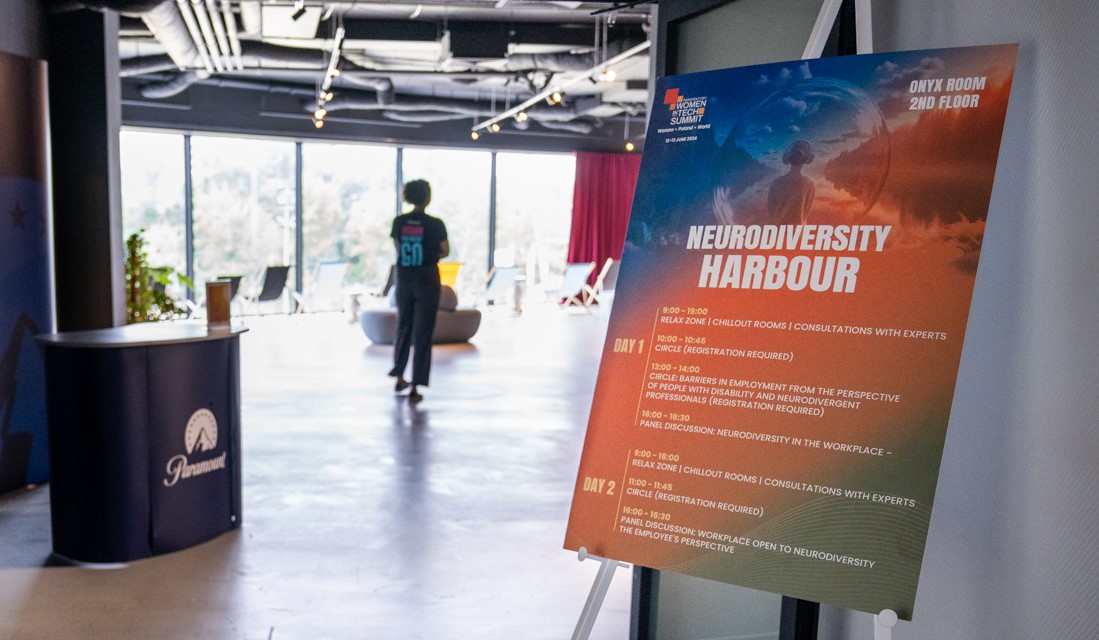
The Summit Neurodiversity Harbor consisted of several zones, resources and activities:
Relax Zone: A dedicated space for relaxation where attendees can unwind and rejuvenate.
Chillout Room: A secluded area designed for those who need a quiet and private space to relax. Due to limited seating, usage is restricted to 15-minute intervals to ensure everyone has the opportunity to benefit from this space.
Consultations with Experts: Neurodiversity Harbour provides the opportunity to consult with experts such as psychologists, therapists, tutors, and job coaches. These experts are available to discuss any topic related to neurodiversity and offer professional advice and support.
Circles: Group meetings in a friendly and safe atmosphere aimed at deepening awareness and understanding of neurodiversity through shared experiences.
Discussion Panels - engaging panels discussing various aspects of neurodiversity in the workplace from different perspectives:
"Neurodiversity in the Workplace - Benefits and Challenges. Employer's Perspective"
"Workplace Open to Neurodiversity. The Employee's Perspective"

The availability of experts such as psychologists, therapists, and job coaches in the Neurodiversity Harbor provides valuable resources for attendees seeking advice and support. This can be particularly beneficial for those facing challenges related to neurodiversity in their personal or professional lives.
Activities like group circles and discussion panels foster a deeper understanding of neurodiversity. These sessions offer insights into the experiences of neurodiverse individuals, promoting empathy and inclusivity among all conference attendees.
The Neurodiversity Harbor serves as a focal point for neurodiverse individuals to connect with others who share similar experiences. This can lead to the formation of supportive networks and communities, both during and after the conference.
By providing a Neurodiversity Harbor we demonstrate our commitment to inclusivity and accessibility. This sends a positive message to all attendees, highlighting the importance of accommodating diverse needs and fostering an inclusive environment.
In summary, the Neurodiversity Zone is a necessary feature of the conference as it addresses the unique needs of neurodiverse individuals, promotes inclusivity, and enhances the overall experience for all attendees. We hope that this trend will catch on in the Polish event industry and that soon every large-scale event will offer its participants a neurodiverse-friendly zone.