
One of the attractions of this year's Summit was the exhibition of the Poznań Enigma Cipher Center entitled "Cipher_Girls". The project aims to fill the scattered gaps related to the presence and visibility of women in the history of science and the development of digital technologies. The CIPHER_GIRLS exhibition, referring in its arrangement to the iconic feminist work of art "The Dinner Party" by Judy Chicago, presents the figures of Polish and foreign female coders, who seem to be forgotten by history daily, and without whom the achievements of modern cryptography would not be possible!
"Cipher Girls are outstanding women, but unfortunately most of them are not known at all or are little known. The aim of our project is to restore their due memory and popularize knowledge about their work and achievements" - emphasized the project curator Katarzyna Kucharska.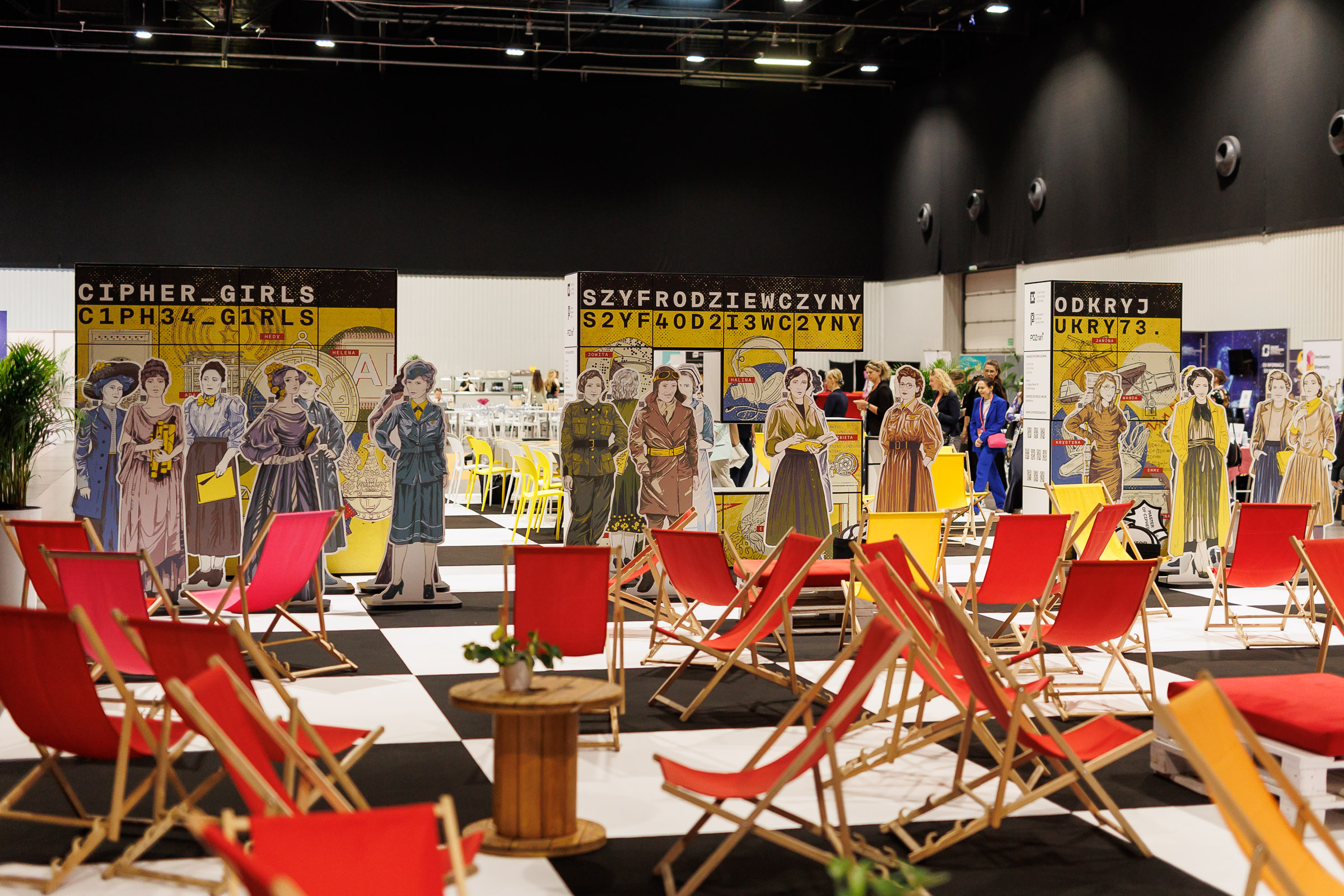
Among the main characters of "Cipher_Girls" there are many heroines of Polish ciphers, including Zofia Sokolnicka, an emissary working for Poland after the outbreak of World War I, one of the first female members of parliament, less known as a master of ciphers. Another heroine is Hanna Malewska, an outstanding Polish writer, and author of several historical novels, completely unrecognizable today as the head of the Foreign Cipher Bureau of the ZWZ and AK, head of the so-called Karolinki - cipher girls in the Warsaw Uprising.
Other "Cipher_Girls" include Wanda Modlibowska, also a cipher girl, known for breaking world records in gliding, and Halina Ryffert, a graduate of mathematics at the University of Poznań, an outstanding professor of acoustics after the war, during the war as a cipher girl "Basia" created a one-person cipher cell for the Main Government Delegation for Polish lands incorporated into the Reich.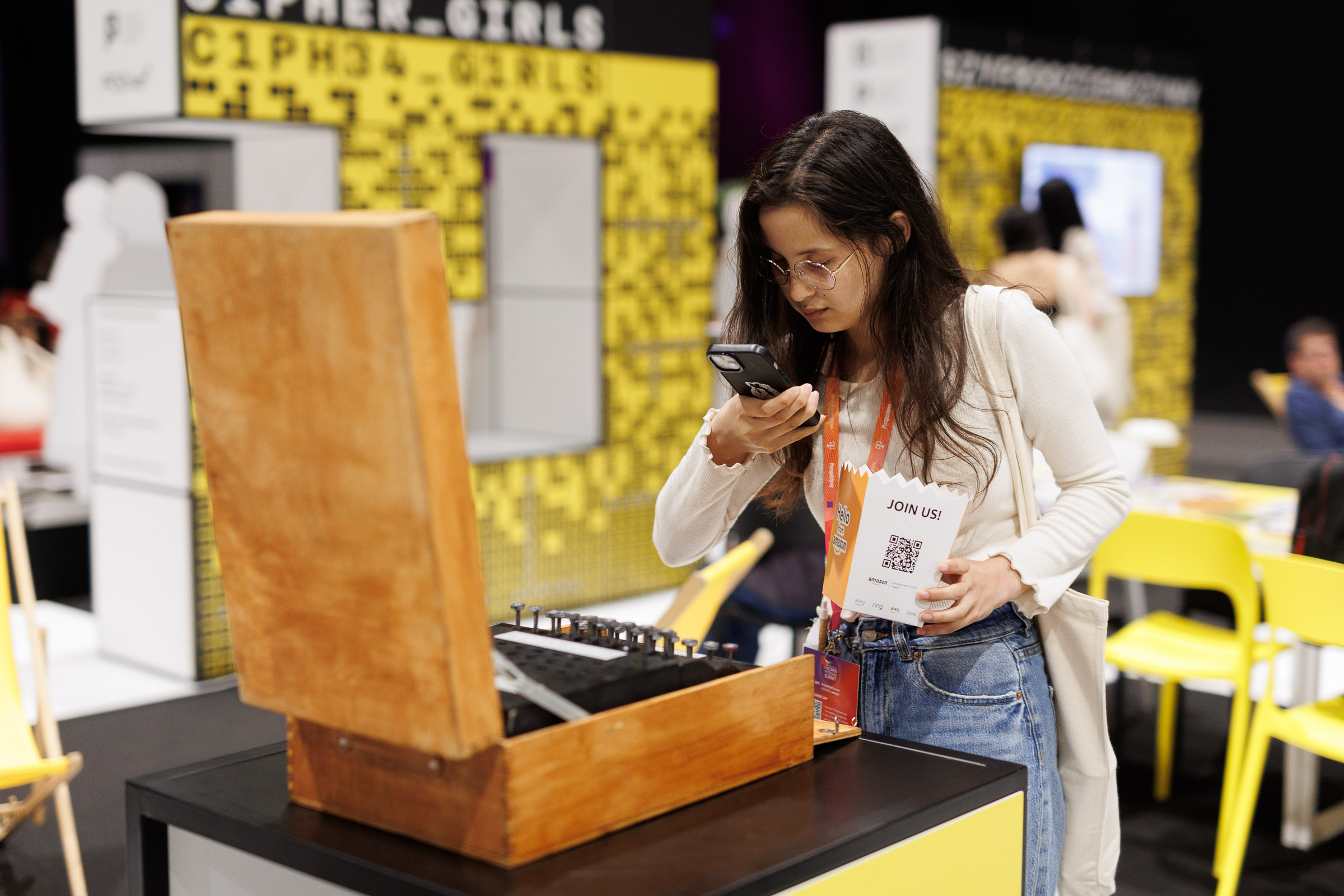
The new heroine of the "Cipher_Girls" project includes Winston Churchill's favorite agent - Krystyna Skarbek, the first Polish computer scientist Jowita Koncewicz, and Helena Rasiowa - an outstanding Polish mathematician who dealt with the theoretical foundations of computer science and artificial intelligence. The historical achievements of Polish women are presented in a broad, international context.
We meet the Polish "Cipher_Girls" surrounded by heroines from all over the world who have been active throughout history, including Ady Lovelace – the first female programmer, Agnes Meyer Driscoll – the first lady of American naval cryptology and the conqueror of Japanese ciphers, Hedy Lamarr – the inventor of wireless communication, or Margaret Hamilton – the author of the software for the famous Apollo 11 mission.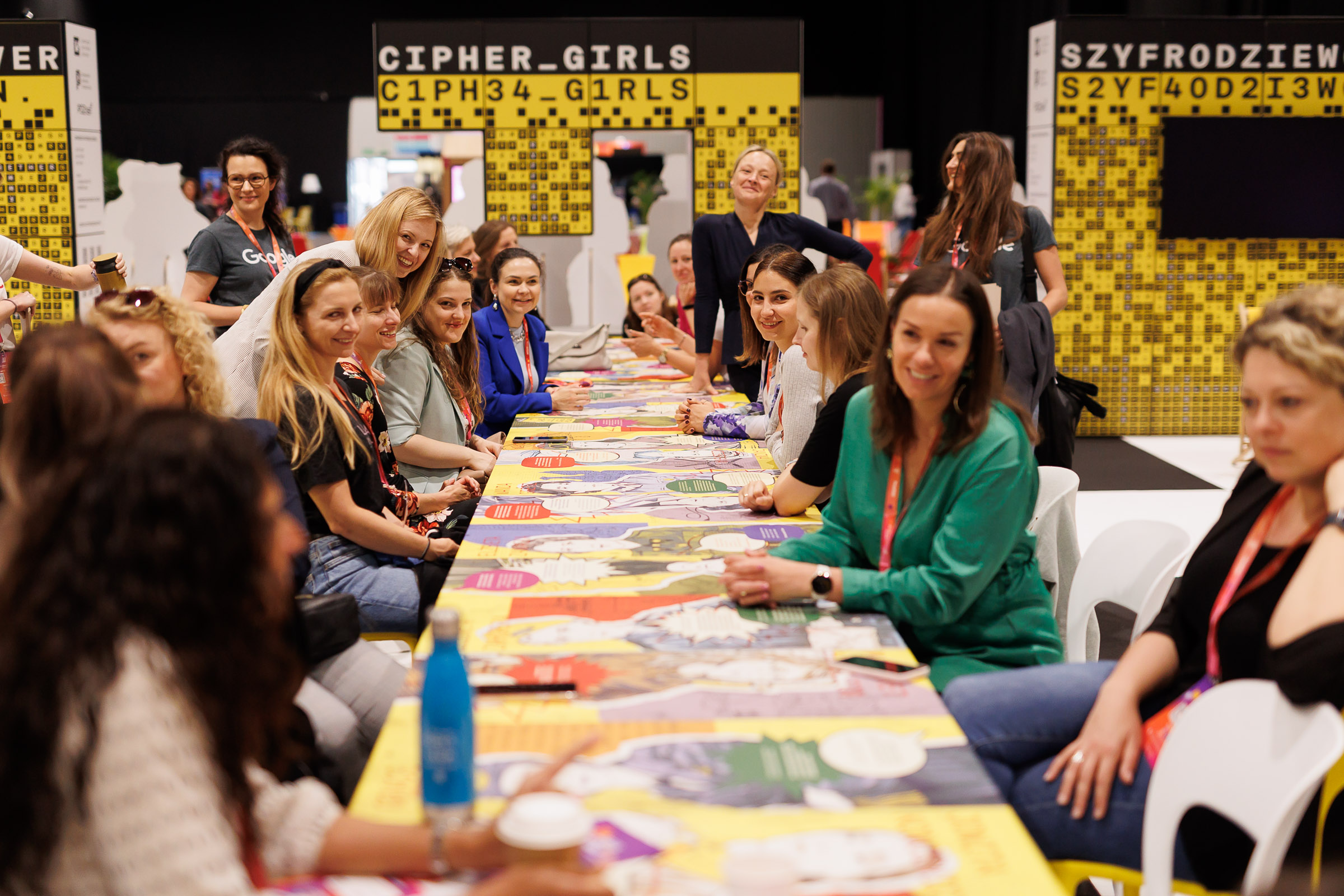
The broad time perspective of the project not only shows the continuity of women's achievements in science and technology related to cryptology, mathematics, and computer science throughout history, but it is also particularly valuable for girls who are looking for role models, especially in STEM fields.